The Myth of "More Options"
For years I believed that a bigger closet meant more choices and therefore more style. I collected dresses, blouses, and jackets in every color, thinking variety would make dressing easier. Instead, it created decision fatigue, visual chaos, and a lot of "I have nothing to wear" moments despite a full rack.
The turning point came when I started editing not just by quantity, but by compatibility. I realized a small wardrobe becomes effortless and even luxurious when every piece truly belongs with the others.
What "Belong Together" Actually Means
It's not about everything being the same color or style. It's about harmony in:
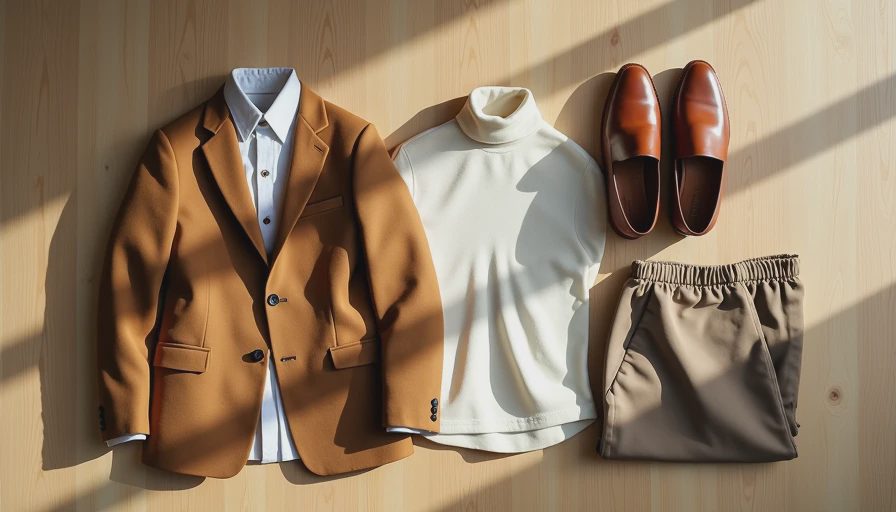
Color palette — pieces that share a common language of warm neutrals, soft taupes, creams, camels, charcoals, and gentle olives.
Texture conversation — wool that plays well with linen, cotton that balances knitwear, leather that grounds everything.
Silhouette compatibility — relaxed but structured shapes that layer and mix without fighting.
Lifestyle fit — clothes that support the real days I actually live.
When these elements align, magic happens. Getting dressed takes minutes instead of half an hour, and I feel more like myself in everything I wear.
How I Edited Down to a Closet That Works

I did this in stages:
First, I pulled everything out and asked one brutal question for each item: "Does this play well with at least seven other pieces I love and wear regularly?" If the answer was no, it went into the donation pile.
I kept:
Multiple excellent button-downs (white, oat, striped)
Two pairs of perfect wide-leg trousers/jeans
One hero camel wool blazer
Several merino knits in complementary tones
Two versatile midi dresses
Reliable leather loafers and a couple of boots
Everything mixes. The white shirt works with the camel blazer, the taupe dress, the wide-leg jeans, and the charcoal knit. There are no lonely pieces that only go with one specific outfit.
The Daily Freedom This Creates
Mornings are calmer now. I open the closet and see a collection of friends rather than competitors. Need something for a coffee walk? The cream turtleneck, wide-leg jeans, and camel blazer are ready. Running errands on a cooler day? The white shirt, taupe trousers, and merino cardigan feel effortless.
Because the pieces belong together, I don't waste mental energy trying to force mismatched items. The wardrobe supports me instead of demanding constant problem-solving.
The Role of Repetition
Having two or three versions of what works (multiple good white shirts, several similar merino sweaters) is liberating, not boring. Repetition creates reliability. It means when I spill coffee on one white shirt, I still have another ready. When one pair of trousers is in the wash, the other is waiting.
This is the opposite of fast fashion's "never wear the same thing twice" pressure. Real style lives in pieces you love enough to wear often.
What I Removed (And Don't Miss)
The "special occasion only" dresses that didn't mix with everyday pieces
Bright or trendy items that clashed with my core palette
Things that required specific shoes or accessories I rarely reached for
Anything high-maintenance that created friction in daily life
Letting go of these created physical and mental space. My closet now feels airy and intentional, just like the apartment I love spending time in.
Owen's Perspective
My husband has watched this evolution with amusement and appreciation. He used to see me stressed in front of a bursting closet. Now he sees me get ready quickly and leave the house feeling good. He says the smaller wardrobe makes me look more "like Clara" — consistent, calm, and quietly confident.
Building Your Own Cohesive Small Wardrobe
Start by identifying your core palette and silhouette preferences. Choose 8–10 hero pieces that mix effortlessly, then slowly add supporting items that speak the same language. Be patient. This is a relationship you're building with your clothes, not a quick overhaul.
Keep a simple wardrobe journal noting successful combinations. Over time, patterns will emerge and your intuition will sharpen.
The Quiet Joy of Cohesion
There's a deep satisfaction in owning less but loving more. When your clothes actually belong together, they start to feel like a natural extension of your life and personality rather than a separate project called "getting dressed."
A small wardrobe done right isn't restrictive — it's freeing. It removes noise so the signal (your personal taste, your comfort, your days) comes through clearly.
If it only looks good in isolation but creates chaos when mixed with the rest of your closet, it's not staying. The pieces worth keeping are the ones that make the whole wardrobe better simply by being there.
This approach has brought more joy to my daily dressing than any shopping spree ever did. My closet is smaller, but my style feels richer, calmer, and much more like home.



No comments yet — be the first to share a thought.